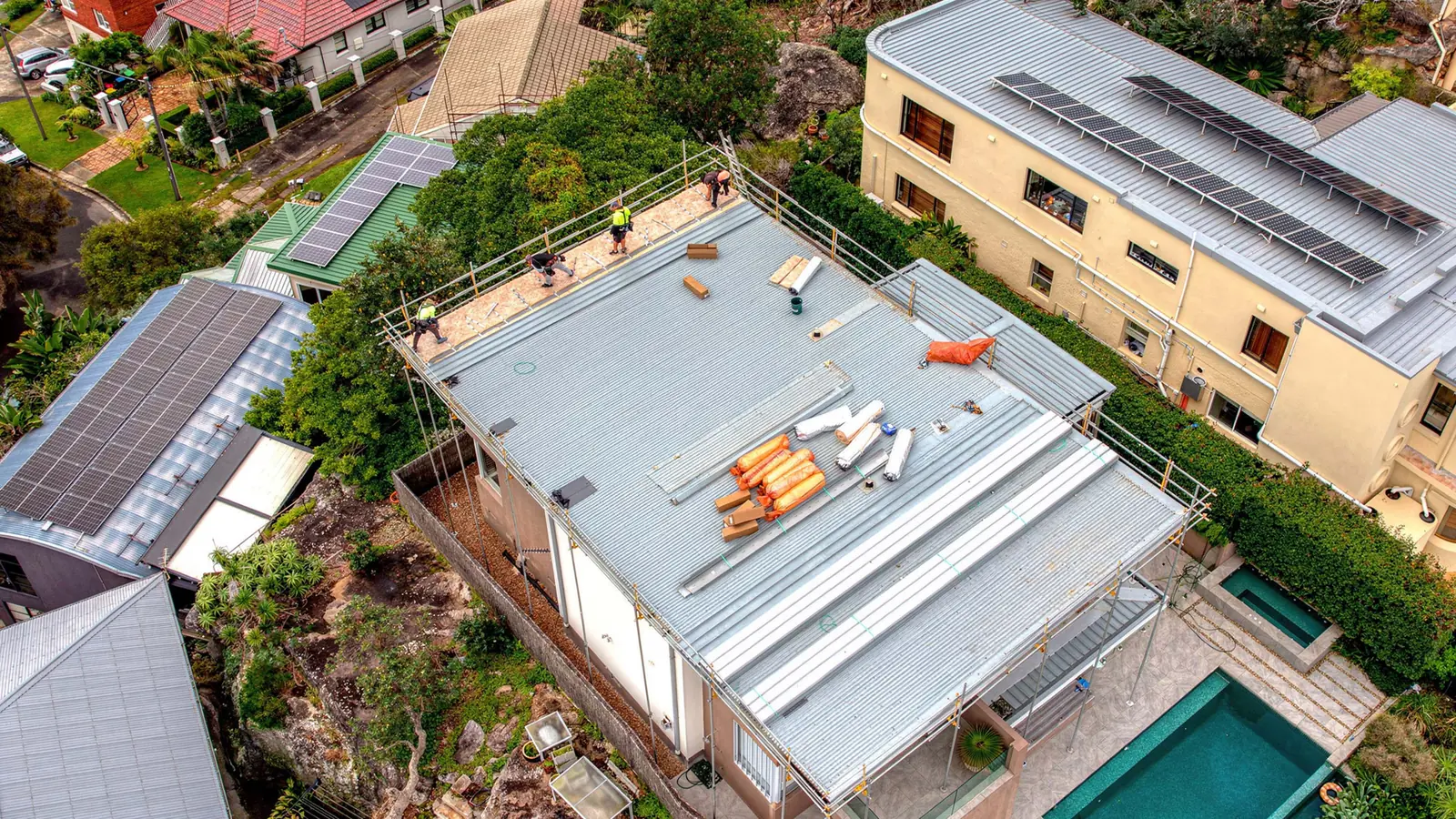
Sarking is a membrane or blanket layer installed under tiles or metal sheets. It is not a substitute for a sound roof covering, but it can improve weather resistance, thermal comfort and condensation control when the product matches the roof construction. In Sydney, strong sun, seasonal storms and humid spells all influence whether sarking is worth including, especially during a re-roof.
What roof sarking is
Sarking is installed over the rafters or battens, beneath the finished roof covering. Depending on the product, it can shed water that gets past a cracked tile or lifted sheet, reduce wind-blown rain entering the roof space, and reflect radiant heat away from the ceiling.
It is part of the roof system rather than a stand-alone finish. Flashings, ventilation, insulation and the cladding above still need to be in good condition. Sarking works with those layers; it does not replace them.
Why sarking is used
A correctly specified layer can reduce heat load in summer, limit dust and debris entering the roof space, and provide a secondary barrier if water gets past the outer covering. The benefit depends on the product, coverage and how well edges and penetrations are detailed.
- Secondary weather barrier beneath tiles or metal sheets
- Reduced radiant heat reaching the ceiling in summer
- Less dust, pollen and fine debris in the roof space
- Support for condensation control when paired with ventilation
- A more complete roof build-up during new work or re-roofing
Reflective, non-reflective and foil types
Reflective foil sarking uses a metallic face to turn radiant heat away from the building. It is common under metal roofs in warm climates. An anti-glare coating is often specified on the upward face so installers are not working against a harsh reflection.
Non-reflective membranes are used where glare is a concern, where the layer is mainly a weather barrier, or where the roof build-up already includes a separate insulation product. Breathable synthetic sarking can allow moisture to move out of the roof space while still shedding water.
Insulated roof blankets combine a foil or membrane face with a fibre layer. These are often considered on metal roofs when thermal performance and condensation control are both priorities. Product choice should follow the roof pitch, cladding type and ventilation strategy, not a one-size-fits-all preference.
Does a Sydney roof need sarking?
Many older tiled roofs across Greater Sydney were built without a continuous membrane. They can still perform well if tiles, ridges, valleys and flashings are sound. Sarking becomes more relevant when the covering is being renewed, when heat in the roof space is a recurring issue, or when wind-driven rain has found a path past the outer layer.
Coastal suburbs deal with salt and stronger wind. Western Sydney deals with hotter roof surfaces in summer. Leafy North Shore and Inner West streets add debris that can keep moisture sitting on roof details. None of these conditions automatically require a retrofit, but they are reasons to consider sarking when the roof is already open.
Retrofitting sarking under an existing covering is often limited. Access, battens, wiring and the risk of disturbing a serviceable roof can outweigh the benefit. A roof inspection can confirm whether the membrane can be added as part of planned work, or whether attention should stay on repairs and ventilation first.
What influences the cost
Cost is driven by measured roof area, pitch, access, product type and whether the sarking is installed during a re-roof or as a more constrained extra. Complex hips, valleys, skylights and solar penetrations add detailing time.
A foil membrane is usually a different scope from a thicker insulated blanket. Comparing quotations only by square metre can hide those product differences. Ask what material is proposed, how overlaps and penetrations will be treated, and whether ventilation and insulation are part of the same plan.
Frequently asked questions
Is sarking the same as roof insulation?
No. Sarking is a membrane or facing layer under the roof covering. Insulation is a thermal layer, often in the ceiling or as a roof blanket. Some products combine both, but they are specified for different jobs.
Can sarking be added without replacing the roof?
Sometimes, but access is often poor and the existing covering may need to be lifted. In many Sydney homes it is more practical to include sarking when the roof is already being renewed.
Does every tiled Sydney roof need sarking?
Not automatically. Plenty of tiled roofs perform well without it when the covering, ridges and flashings are maintained. Sarking is most often considered during re-roofing or where heat and weather exposure justify a more complete build-up.
Which sarking suits a Colorbond roof?
Metal roofs often use reflective foil or an insulated blanket, subject to pitch, ventilation and the cladding product. The right choice depends on the roof design rather than the brand of sheet alone.
Will sarking stop a leaking roof?
It can shed incidental water that gets past a covering, but it will not correct cracked tiles, failed flashings or blocked valleys. Active leaks still need the entry point traced and repaired.